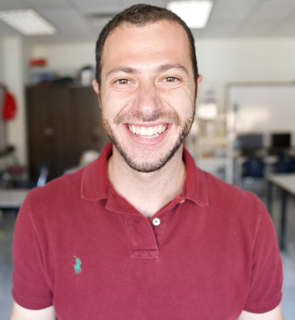
I teach computer science. I want kids to figure things out for themselves.
I’m David Steckler. I teach 7th grade computer science, and I spend a lot of time trying to make class feel like a place where kids actually do things. Code, robotics, AI, games, websites, weird little challenges — whatever gets them thinking and building instead of just waiting for the next direction.
This site is basically where I keep the stuff I’m working on. Some of it is for class. Some of it is me messing around with an idea until it works.
Teaching
What I actually use or am trying in class: Python, robotics, AI, lessons, activities, and whatever else seems worth testing with students.
Explore teaching →Building
Games, webpages, tools, experiments, and random ideas I wanted to see if I could make work.
See what I’m building →Thinking
Education, technology, philosophy, behavior, and whatever I’ve been thinking way too much about lately.
Read the ideas →A few things I keep coming back to.
I don’t really have a big teaching manifesto. These are just the ideas that keep showing up in how I teach.
I don’t want to rescue kids the second something gets hard. A lot of learning happens in the part where you’re stuck and have to try something else.
A big goal for me is pretty simple: students should need me less over time. They should start trusting themselves to figure things out.
I like when the work turns into something you can actually see, use, play, explain, or show someone.
Stuff I’m working on right now.
This changes a lot. These are a few things I’ve been spending time on lately.
7th Grade CS
Lessons and resources from the computer science stuff I’m teaching.
Open course →Interactive Timeline
I wanted the history of programming languages to feel like one story instead of a list of dates.
Explore timeline →TIOBE Index
The current TIOBE rankings, where the languages came from, and what the ranking actually means.
View TIOBE →BASTION v10
Crystal 10
A strategy game I keep rebuilding because I’m still not satisfied with it.
Play the game →“There is no speed limit to learning.”// I come back to this a lot
Why I teach this way
I began as a math teacher. Then I got the chance to teach robotics and automation and said yes. That decision changed the way I teach and what I wanted school to feel like.
More about me →Everything else is still here too.
I have a lot of old lessons, tools, games, half-finished ideas, and random experiments on here. I didn’t want to delete them just because they don’t belong on the front page.